
Digital education with AI avatars – relieves practices, empowers patients and creates scalable value creation in healthcare.
Context
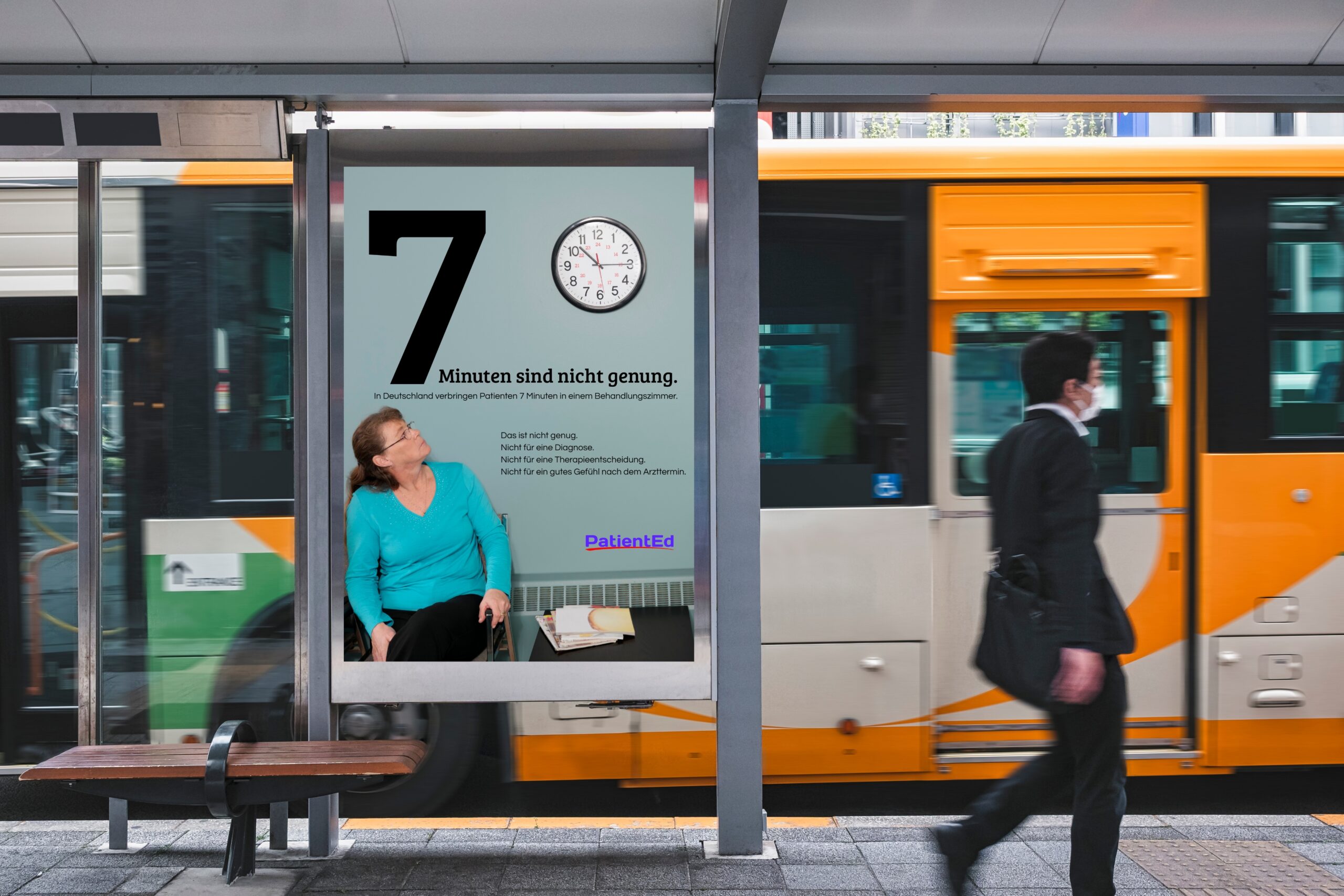
In the DACH health market, a shortage of skilled workers, rising costs and inefficient education processes are causing structural pressure. Medical teams spend up to 40% of their working time with repeated educational interviews - while at the same time decreasing compliance and 43% burnout rate in the medical field.
Internationally – from Switzerland to India – there is a growing need for scalable, culturally adaptable patient education systems that increase understanding, safety and efficiency at the same time.
Details
Time frame:
since 2024
Role:
Founder
Participation:
Management
Overview
PatientEd is an AI-based platform that combines photorealistic avatars (“digital twins”) with medically curated LLMs to make patient education interactive, multilingual and 24/7 available. The solution is modular, scalable for practices, clinics, telemedicine services and pharmaceutical patient journeys.
Pilot cooperations exist with clinics, pharmaceutical companies (e.g. Roche, Bayer, Gerresheimer) and universities (ETH, ZHAW, FHNW) for validation, co-development and data evidence.
Challenge
The following challenges are addressed:
- High loss of time due to repetitive reconnaissance, limited personnel resources
- Low patient compliance due to incomprehensible standard information
- Growing pressure on clinics to use digitally integrated and GDPR-compliant tools
- Previous solutions (PDFs, videos, standard chatbots) are static, non-personalizable and not interactive
Solution
PatientEd ersetzt statische Aufklärungsprozesse durch interaktive, empathische AI-Avatare, die:
- convey medical content in a natural conversational style
- Answer questions in real time (voice & chat)
- Automatically adapt content to language, age, intervention, level of education
- Making compliance measurable through knowledge queries and feedback modules
- can be integrated into existing hospital or practice software (API-first)
Pilot cooperations exist with clinics, pharmaceutical companies (e.g. Roche, Bayer, Gerresheimer) and universities (ETH, ZHAW, FHNW) for validation, co-development and data evidence.
Results
Clinics report higher patient satisfaction, better predictability and lower OPEX costs.For doctors, PatientEd means more time for complex cases and relief through automated routine communication. For patients: real participation and trust in the treatment process.
PatientEd creates a scalable infrastructure for education, prevention and education – as a link between medicine, technology and humanity.